

Current issue
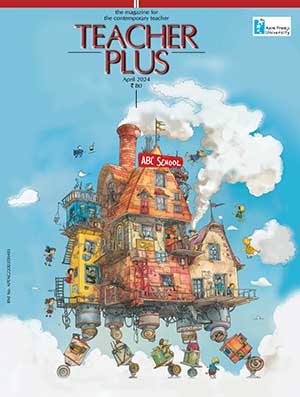
In this issue
What’s our purpose?
Usha Raman
What motivates a school to come into being, to act? Are schools just entities that sell a product – education? What is a school's understanding of education? How does this understanding play out in the classrooms?

What drives schools? A critical sociology perspective
Simran Luthra
When did schools, as we know them today, emerge? Is the Indian scenario peculiar? What drives them? What should drive them? Who gains from schools and how?

The peer pressure of tomorrow
Neerja Singh
Peer pressure driven by social media is a major challenge today. Do we realize its impact on the youth? Can we help the youth with the skills, knowledge and support systems they would need to deal with this?

Hedy Lamarr: A beauty with brains
Mamata Pandya
In this issue we get to know about a Hollywood actor, known for her beauty, who also had a lifelong passion for invention and often spent her evenings working at her drafting table and studying research texts.
March 2024
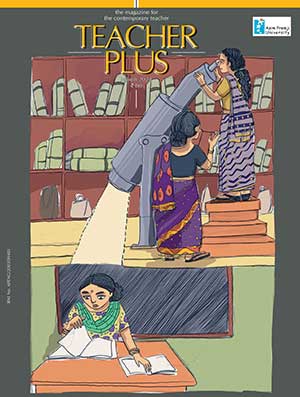
Cover Story | March 2024
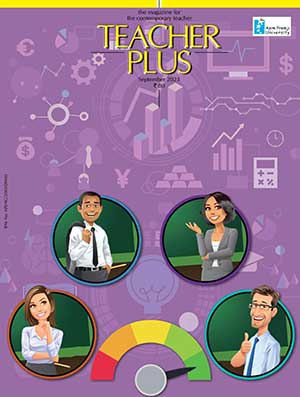
Teacher evaluation: time to rethink and reform
Dr. Gopal Midha and Dr. Tanushree Rawat
Evaluating and assessing students is a big part of the teacher’s job. It helps her understand where her students are on the learning graph and if and how she should change her teaching methodology. But what about the teacher herself? Who is to assess her performance? Are there systems in place to measure teacher effectiveness? Usually student pe
A Step Ahead | March 2024
Sporting horizons
Neerja Singh
Sports broadcasting has come a long way from the days of the radio. Today with games streaming online and the many features that digital technology offers them, fans are more involved participants in sporting events. The digital world is changing the way fans and athletes interact, transforming the sporting world.
Comment | March 2024
Annual day: a platform for leadership development
Shalini Solanki
Songs, dance, drama, musical performances — school annual days are platforms for students to showcase their talent. But is that all there is to an annual day? School annual days are also events where several other life skills including leadership skills can be developed.
 Read more articles from this issue
February 2024
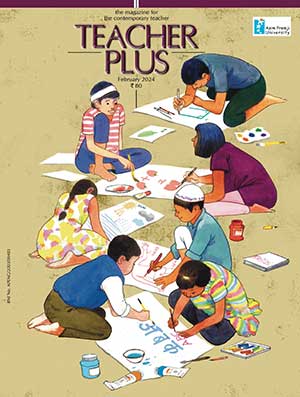
Cover Story | February 2024.
What art gives to the curriculum
Jaai Deolalkar and Sowmya Ravindranath
What is the place of art in education? Is art a subject? Does it have a curricular role? How then does one fan the fire of art engagement without an overwhelming focus on proficiency? When it comes to art and children - are we missing the trees for the forest?
February 2024 | The Teacher Within.
What do learning objectives mean anyway?
Timira
Can we transform classrooms from cold, information-laden spaces to rooms full of rich discussions? Can we facilitate connections across space, time, and context? Can we bring the outside world inside the classroom?
February 2024 | Resources.
Befriending ancient art
How does a book on a place like Mammallapuram take shape? How can an author, who also happens to be a ‘teacher’, weave together his appreciation for sculpture art, fascination for history and love for children?
Read more articles from this issue
January 2024
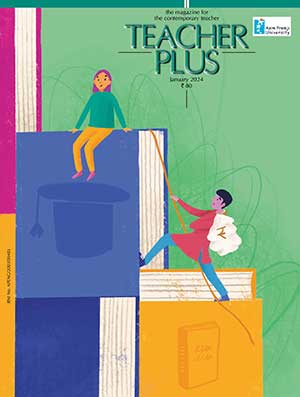
Bringing The Margins In | Cover Story | January 2024.
Savitribai Phule and Fatima Sheikh: Pioneers of Indian education
Anjali Noronha
January is the birth month of two extraordinary women teachers – Savitribai Phule and Fatima Sheikh – who worked to uplift the downtrodden despite belonging to the less privileged sections of the society themselves. At a time when educating girls was shunned in society, these women braved insult, abuse, and atrocities to teach girls from the deprived communities.
A Step Ahead | January 2024.
ChatGPT in schools
Neerja Singh
It has been a while since technology has made inroads into education now. But never has it made the kind of noise that the use of artificial intelligence like ChatGPT is making. Should schools open their doors to AI?
January 2024 | Teaching Practice.
Circle of learning
Deepika Nandal
Circle time is a wonderful teaching aid to nurture. Whether it is to break concepts down for children, or allow them time to reflect, or resolve conflicts, make circle time your go-to strategy.
Read more articles from this issue


What’s our purpose?
Usha Raman
What motivates a school to come into being, to act? Are schools just entities that sell a product – education? What is a school's understanding of education? How does this understanding play out in the classrooms?
What drives schools? A critical sociology perspective
Simran Luthra
When did schools, as we know them today, emerge? Is the Indian scenario peculiar? What drives them? What should drive them? Who gains from schools and how?
The peer pressure of tomorrow
Neerja Singh
Peer pressure driven by social media is a major challenge today. Do we realize its impact on the youth? Can we help the youth with the skills, knowledge and support systems they would need to deal with this?
Hedy Lamarr: A beauty with brains
Mamata Pandya
In this issue we get to know about a Hollywood actor, known for her beauty, who also had a lifelong passion for invention and often spent her evenings working at her drafting table and studying research texts.
March 2024
Cover Story | March 2024
Teacher evaluation: time to rethink and reform
Dr. Gopal Midha and Dr. Tanushree Rawat
Evaluating and assessing students is a big part of the teacher’s job. It helps her understand where her students are on the learning graph and if and how she should change her teaching methodology. But what about the teacher herself? Who is to assess her performance? Are there systems in place to measure teacher effectiveness? Usually student pe
A Step Ahead | March 2024
Sporting horizons
Neerja Singh
Sports broadcasting has come a long way from the days of the radio. Today with games streaming online and the many features that digital technology offers them, fans are more involved participants in sporting events. The digital world is changing the way fans and athletes interact, transforming the sporting world.
Comment | March 2024
Annual day: a platform for leadership development
Shalini Solanki
Songs, dance, drama, musical performances — school annual days are platforms for students to showcase their talent. But is that all there is to an annual day? School annual days are also events where several other life skills including leadership skills can be developed.
Read more articles from this issue
February 2024
Cover Story | February 2024.
What art gives to the curriculum
Jaai Deolalkar and Sowmya Ravindranath
What is the place of art in education? Is art a subject? Does it have a curricular role? How then does one fan the fire of art engagement without an overwhelming focus on proficiency? When it comes to art and children - are we missing the trees for the forest?
February 2024 | The Teacher Within.
What do learning objectives mean anyway?
Timira
Can we transform classrooms from cold, information-laden spaces to rooms full of rich discussions? Can we facilitate connections across space, time, and context? Can we bring the outside world inside the classroom?
February 2024 | Resources.
Befriending ancient art
How does a book on a place like Mammallapuram take shape? How can an author, who also happens to be a ‘teacher’, weave together his appreciation for sculpture art, fascination for history and love for children?
Read more articles from this issue
January 2024
Bringing The Margins In | Cover Story | January 2024.
Savitribai Phule and Fatima Sheikh: Pioneers of Indian education
Anjali Noronha
January is the birth month of two extraordinary women teachers – Savitribai Phule and Fatima Sheikh – who worked to uplift the downtrodden despite belonging to the less privileged sections of the society themselves. At a time when educating girls was shunned in society, these women braved insult, abuse, and atrocities to teach girls from the deprived communities.
A Step Ahead | January 2024.
ChatGPT in schools
Neerja Singh
It has been a while since technology has made inroads into education now. But never has it made the kind of noise that the use of artificial intelligence like ChatGPT is making. Should schools open their doors to AI?
January 2024 | Teaching Practice.
Circle of learning
Deepika Nandal
Circle time is a wonderful teaching aid to nurture. Whether it is to break concepts down for children, or allow them time to reflect, or resolve conflicts, make circle time your go-to strategy.
Read more articles from this issue